Sheet Metal DFM: Why 5 mm Costs You Three Blanks Per Sheet
Descripción
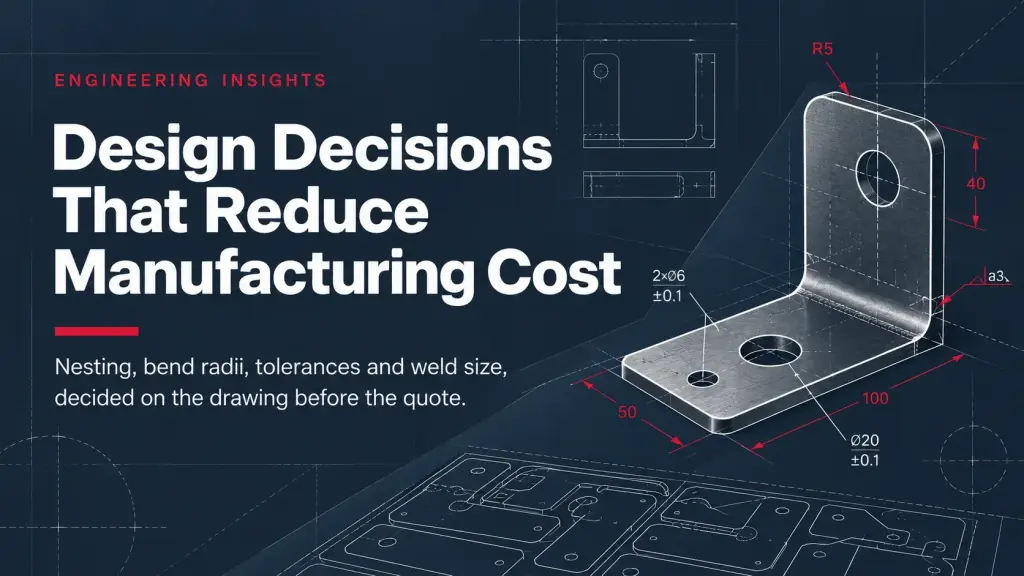
Most fabrication cost is fixed on the drawing, before anyone asks for a quote. By the time purchasing is pushing the fabricator on price, the shop has very little left to give. This article from Sheet Metal Design Experts works through where the money actually goes: nesting, bend radius, general tolerance class, weld size and part count with the arithmetic shown at each step rather than asserted. Written for the engineers who release sheet metal and fabrication drawings. - A 400 × 300 mm blank nests 24 to a 2500 × 1250 mm sheet at 92.2% utilisation. Add 5 mm to one side and it drops to 21 blanks at 82.0% about a seventh more material per part, for a part that functions identically. - Air bending means the punch and V-die set the inside radius, not the drawing. Model the radius the shop's tooling actually produces, and take the K-factor from their test bends rather than the CAD default. - ISO 2768-1 fine, medium and coarse values set side by side. Calling up "fine" across a whole sheet makes every flange height and hole-to-edge distance something the shop has to measure and prove. - Fillet welds cost scales with the square of the leg length. Going from a 6 mm to an 8 mm leg buys a third more throat and 78% more weld metal in every metre of joint. - Welded frames have their own general tolerance standard, ISO 13920. Machining tolerances on an as-welded frame buy either a post-weld operation or an NCR. - Short flanges that can't bridge the V-die, bend order, and holes that pull oval near a bend line the part as the brake operator sees it. Design engineers and drawing checkers releasing fabrication packages, plus the NPI and purchasing people who receive the quote. There's no vendor pitch in the body, it's arithmetic, ISO references, a worked nesting case and a fillet weld cross-section table you can apply to a live drawing today. Design for manufacturing is only cheap while the cost is still dimensions and notes in CAD.
Sheet Metal DFM: Why 5 mm Costs You Three Blanks Per Sheet